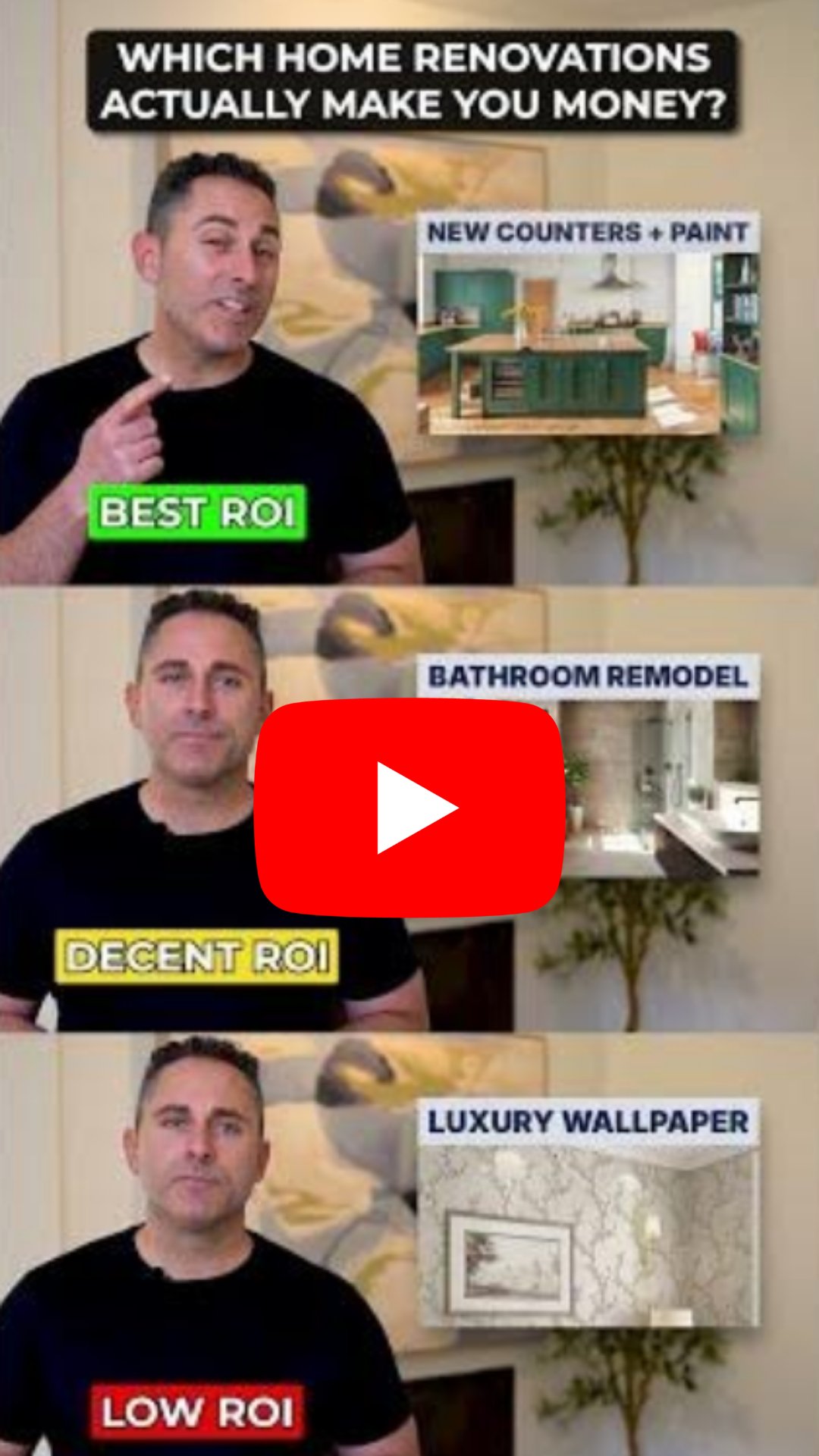
Not All Renovations Add Value — Here's What Actually Pays Off Before You Sell
Every seller has heard some version of "you have to renovate before you list." Sometimes that's true. Often, it's an expensive assumption that barely moves the needle on your final sale price. Before you spend money on a renovation, it's worth knowing which projects buyers actually pay more for — and which ones just cost you money and time on the market.
Watch the video: https://www.youtube.com/embed/j6azDEGyvEI
Renovations That Consistently Pay Off
A fresh coat of paint. One of the cheapest, highest-return projects available. Neutral, updated paint colors make a home feel newer and better maintained, and it's the fastest way to erase years of wear in buyers' eyes.
Curb appeal and landscaping. Buyers decide how they feel about a home before they walk through the door. Clean landscaping, a tidy lawn, fresh mulch, and a well-maintained exterior consistently punch above their cost in terms of buyer perception and how quickly a home sells.
Garage door replacement. Consistently one of the highest-ROI projects nationally, and San Diego is no exception. It's visible from the street, relatively inexpensive, and instantly modernizes a home's exterior.
A minor kitchen refresh. Not a full gut renovation — new hardware, updated lighting, fresh paint on cabinets, and maybe new countertops. Buyers respond strongly to updated kitchens, and a light refresh often delivers a better return than a full remodel because the cost stays proportional to the value it adds.
New entry door. Small cost, real impact. It's one of the first things a buyer touches and sees, and an outdated or worn front door can undercut an otherwise well-maintained home.
Fixing obvious deferred maintenance. Leaky faucets, cracked tile, worn carpet, visible water stains — these don't add value so much as they remove doubt. Buyers subtract mentally (and often more than the actual repair cost) for anything that looks neglected.
Renovations That Often Don't Pay Off
A full luxury kitchen remodel. High-end appliances, custom cabinetry, and premium finishes can cost far more than they return, especially if the rest of the home or the neighborhood doesn't support that price point. Over-improving relative to comparable homes nearby rarely gets fully recouped.
Adding a swimming pool. Pools are polarizing. Some buyers see a lifestyle upgrade; others see a maintenance cost and a safety concern, particularly families with young kids. The upfront cost is high, and the return varies widely depending on the buyer pool for that specific home.
Room additions that don't match the home's footprint. Adding square footage sounds like it should always add value, but poorly integrated additions — awkward layouts, mismatched rooflines, additions that make a modest home feel oddly configured — often cost more than they add in resale value.
High-end bathroom remodels. Similar to kitchens: a clean, updated bathroom sells. A spa-level, luxury bathroom remodel in a mid-range home usually doesn't return what it cost to build.
Converting a garage into living space. It can look appealing in listing photos, but losing covered parking is a real downside for a lot of San Diego buyers, and the conversion cost rarely gets fully recovered at sale, especially compared to what buyers actually value in a home.
Highly personal or trend-specific upgrades. Bold accent walls, unusual tile choices, statement lighting that reflects a very specific taste — these can actually work against you, since buyers have to mentally "undo" a strong personal style before they can picture themselves in the space.
How to Decide What's Worth Doing
A few questions worth asking before committing to any project:
- Does this fix a problem, or add a preference? Fixing problems (deferred maintenance, outdated systems, obvious wear) tends to pay off more reliably than adding preferences (luxury finishes, personal style).
- Does this match what's typical for the neighborhood? A renovation that pushes a home well above what comparable homes nearby are selling for rarely returns its full cost.
- Will this help the home sell faster, or just look nicer in photos? Faster sales and fewer price reductions are often a bigger financial win than the renovation itself.
The Bottom Line
The renovations that actually help you sell for more tend to be the ones that remove doubt and modernize what a buyer already expects — fresh paint, curb appeal, a garage door, a light kitchen refresh, and fixing visible wear. The ones that tend to disappoint are the expensive, high-end, or highly personal projects that cost far more than most buyers are willing to pay extra for. Before you renovate, it's worth getting a second opinion on which projects will actually move your specific home's value, not just its appearance in photos.
Thinking about renovating before you list? Let's walk through your home and figure out what's actually worth doing.
